The £100,000 Startup Race
Revenue Is the New Pitch Deck
A 52-week competition for UK founders scaling from £5K to £100K ARR. Verified revenue. Public league tables. Investors watching. The winner gets £100,000 investment.
Entry Criteria:
You need to be generating between £5,000 - £10,000 ARR
You need to have started trading after June 2024
You need to be an SEIS qualifying trade
UK Limited Company
Check your eligibility - takes 2 minutes, no equity or IP commitments required.
The Fundraising Trap at £5,000 - £10,000 ARR
At £5 - £10K ARR, you occupy a fundraising no-man's-land.
Too much traction to pitch pure vision. Too little to demonstrate product-market fit.
The data on what happens when founders at your stage try to raise is stark: 99% walk away with nothing.
Not worse terms - nothing.
The average pre-seed round requires 39 investor meetings, consuming 40–50 hours per week for 6–18 months.
54% of founders report fundraising took longer than they expected.
38% ran out of personal funds during the process.
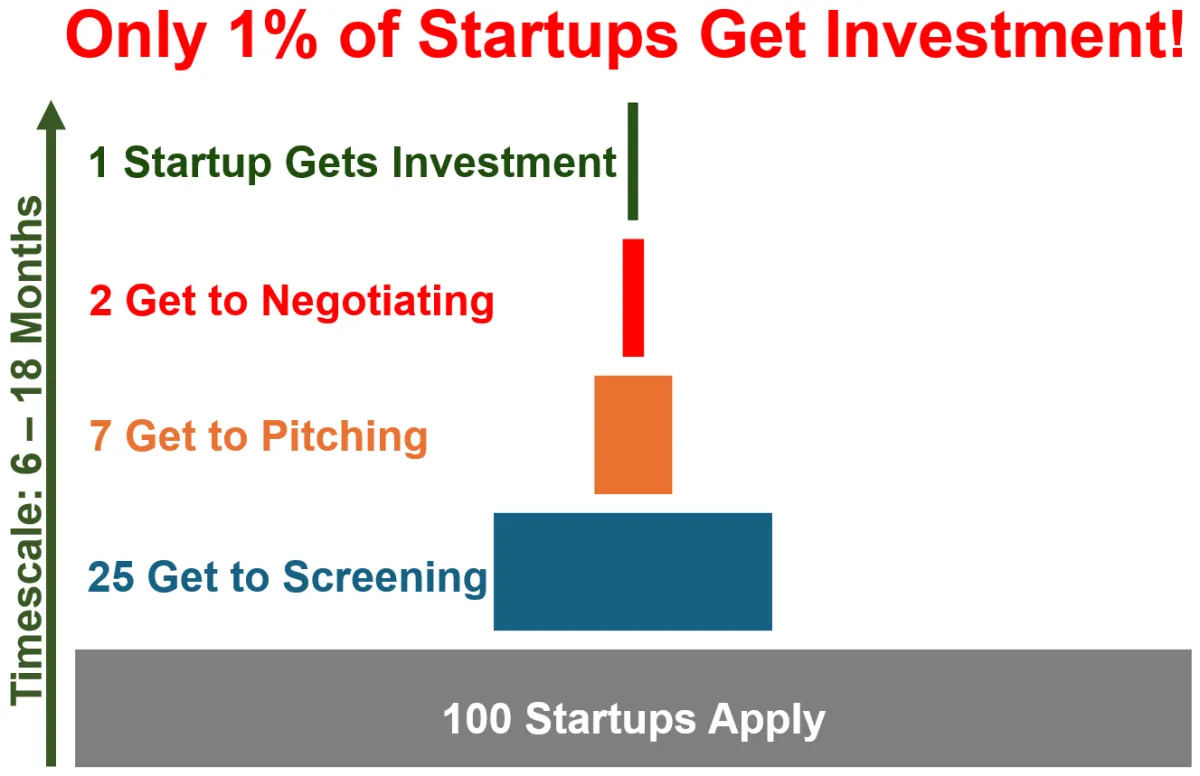
During all of that, revenue stagnates. The opportunity cost exceeds £22,000 in ARR that could have been built instead.
This isn't a risk worth taking.
A Tale of Two Founders
Mick was a tech consultant building a café operations app. Smart, hardworking, well-read.
He spent 6 months on research, 18 months building in isolation, then started pitching investors.
He celebrated 5,000 app downloads and 40 active users.
- £45,000 invested.
- Zero revenue.
Result: Complete failure.
Jamie was a café manager with no tech background.
Instead of building for 18 months, he tested demand in 48 hours with WhatsApp and spreadsheets.
He charged customers from day one.
- £500 invested.
- £5,000/month revenue.
Result: Investors calling him.
The difference wasn't intelligence or effort.
Jamie built revenue while Mick built pitch decks.
The startup ecosystem is designed to create Micks / The Startup Race is designed to create Jamies.
Your SEIS Window Is Ticking
This matters more than most founders realise.
Your SEIS eligibility lasts 3 years from making your first offer public. You've already been trading - which means you've already consumed 6–18 months of that window.
90% of UK angel investors only invest in SEIS-eligible companies because of the 50% Tax refund.
Lose your eligibility and you lose access to the UK angel pool.
Every month spent on unsuccessful fundraising burns through your remaining window with nothing to show for it.
Time Spent Fundraising
0 months (build revenue)
6 months (unsuccessful)
12 months (unsuccessful)
18 months (unsuccessful)
SEIS Window Impact
Preserved
−6 months
−12 months
−18 months
Risk Level
Low
Moderate
High
Critical
Some founders have closed their companies and started fresh specifically to reset SEIS eligibility. That's how critical this window is.
The Startup Race preserves your SEIS window by channelling your time into revenue growth - so that when you do raise, your traction makes fundraising efficient rather than desperate.
The Human Cost Nobody Talks About
The fundraising path doesn't just waste time. It damages people.
We've coached over 1,000 founders. We've watched brilliant people burn out because they spent a year chasing investors who were never going to say yes. We've seen relationships strain, savings drain, and confidence shatter - not because the founder wasn't good enough, but because they were playing a game designed for them to lose.
54% of founders experience burnout.
75% report anxiety during active fundraising.
30% of entrepreneurs experience depression - four times the rate in the general population.
55% suffer insomnia.
56% receive absolutely no mental health support from their investors
The Startup Race offers a different path: building revenue with a structured peer cohort rather than pitching in isolation.
How the Race Works
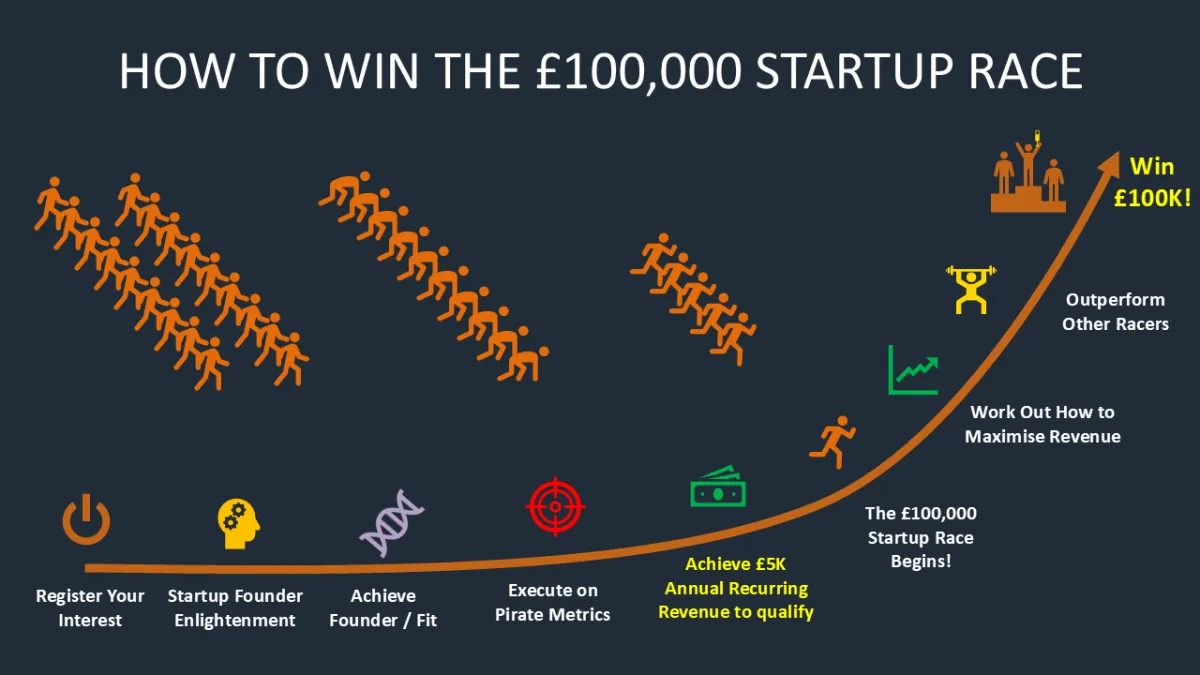
52 weeks. 50 founders. Your revenue verified weekly through Xero or QuickBooks and ranked on a public league table.
Position 1 to Position 35. Public. Unambiguous. Updated every week.
The top 10 (the "Premier League") are visible to Investment Prize Providers (angels and investors) throughout the competition. They're not pitching. Investors are watching. When a founder starts climbing, investors notice.
The winner receives £100,000 investment at a valuation determined at the end of the competition.
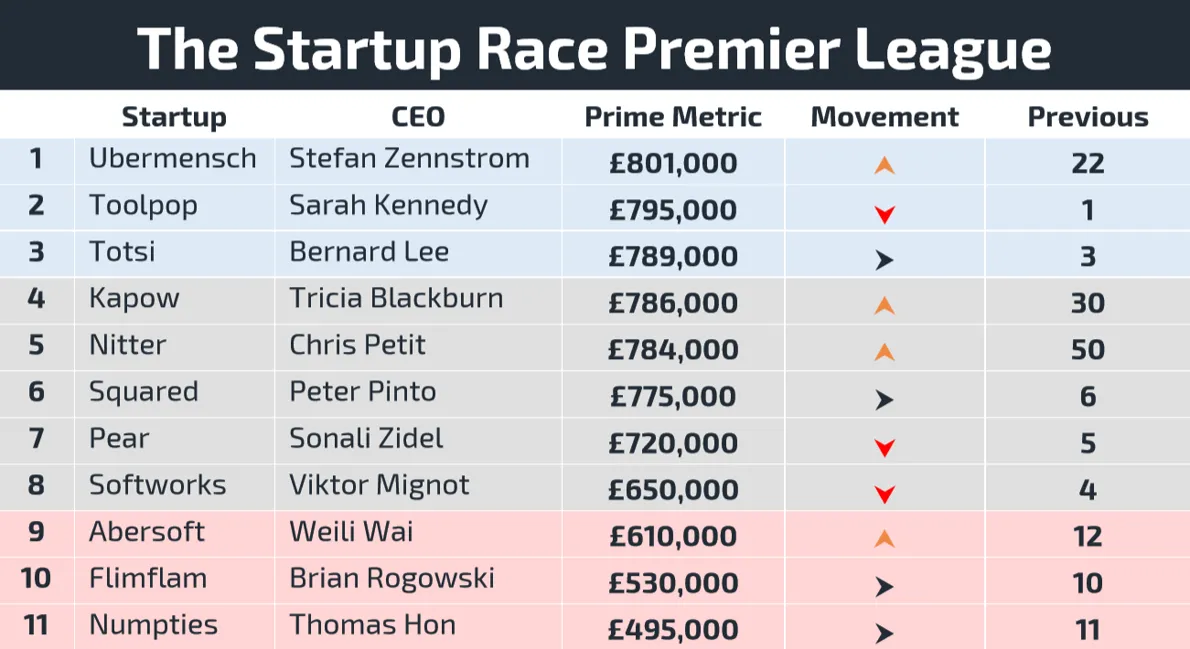
Multiple ways to compete. We track absolute revenue, but also growth rate - a founder at £8K growing 25%/month outperforms a founder at £15K growing 5%. Weekly "Top Mover" recognition and engagement streaks mean progress is rewarded regardless of starting position.
The gap always feels bridgeable. You see your division rivals - the founders above and below you. Not an insurmountable leaderboard. A challenge you can meet.
Daily tracking including zeros. Our Traction App requires daily metric entry. Including zeros. Most dashboards let you avoid bad news. This one makes you type "0" for 0 customers acquired. That discomfort drives action.
Mechanism
£5,000 ARR threshold
£50/month commitment
Weekly league table
Our Traction App
Verified revenue
Peer cohort
What it does
You've already proven you can sell. Pre-filters for founders who execute.
Financial stakes activate loss aversion. You show up differently when you're paying.
Public accountability + competition. Your progress (or lack of it) is visible.
Daily metric entry - including zeros. Makes drift impossible to ignore.
Xero/QuickBooks integration. No hiding from reality.
Founders at your exact stage. Lateral comparison that motivates rather than demoralizes.
Your Improvement
+25% baseline
+35%
+25%
+20%
+12%
+15%
These don't just add. They compound.
A founder working alone on ambitious goals has roughly a 29-35% success rate.
A founder in a structure that combines financial stakes, public accountability, verified metrics, peer competition, and proven methodology? The research suggests that pushes toward 70-80%.
That's not magic. It's mechanism design.
We're not asking you to be more disciplined. We're putting you in an environment where discipline is the default.
What You Get
We didn't invent this from scratch. We've spent a decade learning what works, training with Ash Maurya (LEANSTACK), and testing everything with real founders facing real problems.
Pirate Metrics (AARRR) - Easily find where your Acquisition, Activation and Revenue is broken
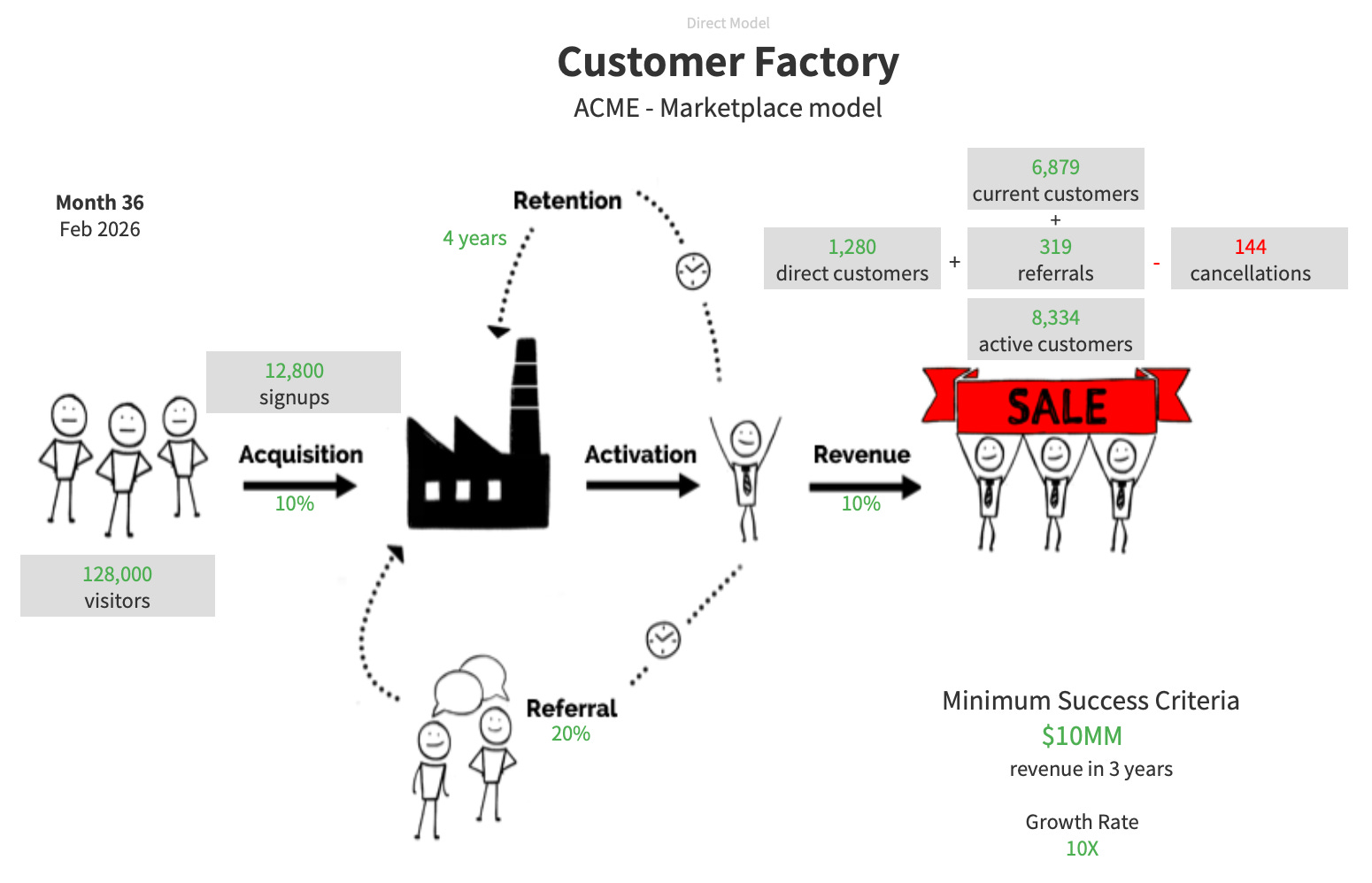
Customer Factory - Ash Maurya's systematic approach to making more money
Minimum Revenue Product (MRP) - what's the smallest thing you can sell? Not build - sell
Product/Service Pyramid - extract up to 60% more revenue from customers you already have
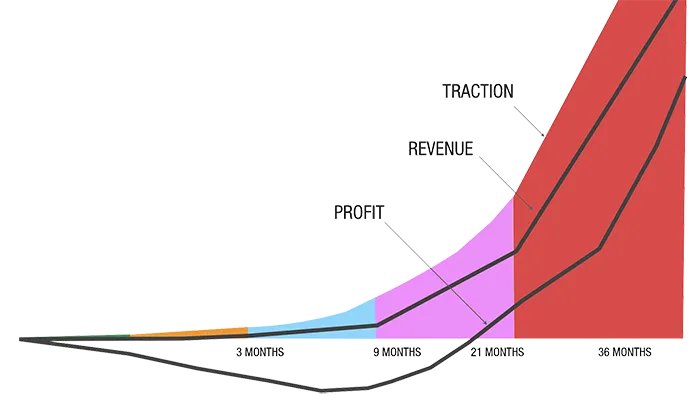
Traction Roadmap - create a believable, achievable revenue goal to build a >£10M company in 3 years
Learning Gap - visual chart plotting intended vs actual revenue. The gap is impossible to ignore
Three-Hour Habit - first three hours of every day on revenue, including weekends
Bundled software and tools:
LEANSTACK platform access (worth ~$1,000/year)
LivePlan business planning software (worth £~240/year)
Traction App - Our proprietary daily tracking tool with verified metrics (worth £1,200)
Automated revenue verification from your Xero/QuickBooks account
Your peer cohort:
49 other founders at your exact stage. Not mentors giving advice from a decade ago. Not investors with different incentives. Founders doing the same thing, at the same time, with the same constraints.
The Valuation Maths
At £5,000 ARR, your company is worth approximately £50,000 at a 10x revenue multiple.
You have no negotiating leverage. If you raise at this stage, you're giving away 25–40% of your company - and at that valuation, the amount you raise barely covers a few months of runway.
At £100,000 ARR, the conversation changes completely. At a 10x multiple, your company is worth over £1,000,000. The winner of the Startup Race sells ~10% for £100,000. That's a fundamentally different negotiation.
The cascading effect through future rounds:
Stage
Post-investment
After seed round (18% dilution)
After Series A (22% dilution)
Raised early at £5K ARR (gave away 25%)
75% ownership
61.5%
48.0%
Built to £100K ARR (sold 10%)
90% ownership
73.8%
57.6% (retain majority)
At a £10M exit, the founder who built first retains nearly £1M more. At a £50M exit, the difference is £4.8M.
Proof It Works
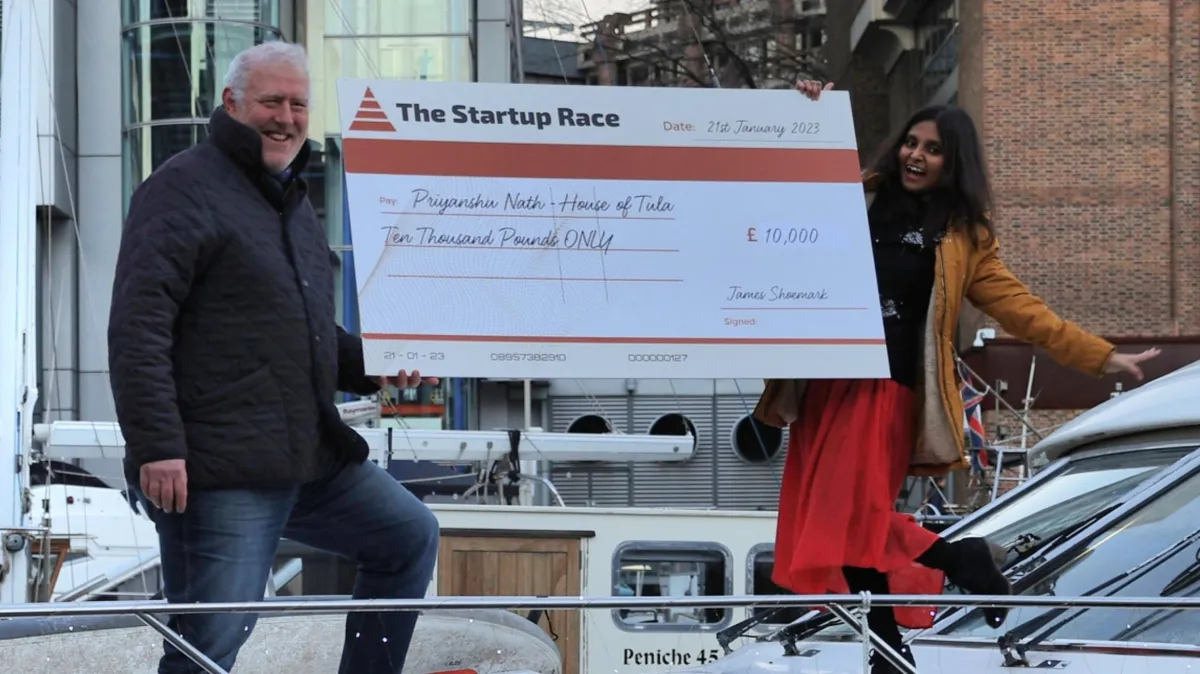
Priyanshu Nath - 44x growth in 6 months. Pri entered a Startup Race competition selling journals made from recycled cotton. She applied the MRP principle: launched a Kickstarter with prototypes, sold pre-orders before commissioning manufacturing. Starting at £100 revenue, she achieved 44x growth and won £10,000 cash
Mariely Olmedo - 17x growth, international visibility. Mariely finished second. Here's what "losing" looked like: featured in an international fashion magazine, investment offers from investors who'd been watching the race, and a business with momentum she couldn't have built in isolation. Second place was worth more than most first-place finishes elsewhere.
These aren't unicorns. They're founders who found a structure that worked.
Even If You Don't Win
Everyone who finishes is better positioned than when they started. More revenue. Developed execution skills. A network of founders who've been through it together. Preserved SEIS eligibility. And 52 weeks of verified performance data that makes future investment conversations completely different.
The gap between a Startup Racer and a founder who spent 12 months fundraising is approximately £22,000 in ARR at month 12.
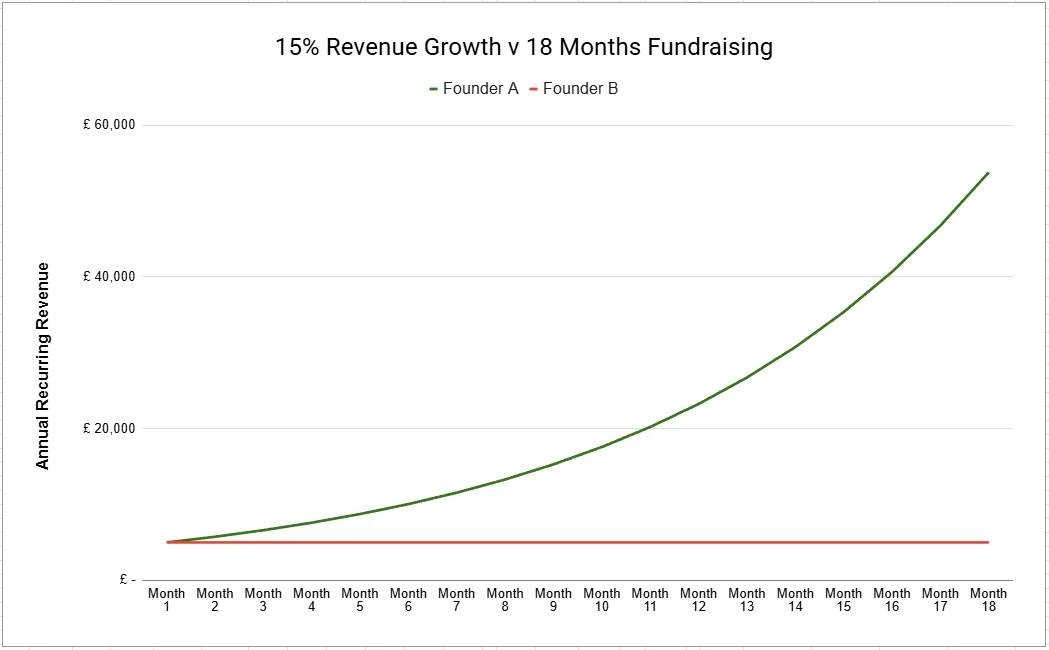
That's a valuation difference of over £220,000.
Even the founder who comes last ends the year with more revenue, more skills, and more options than the founder who spent that year pitching.
This Is For You If
You're at £5–10K ARR and you know that chasing investors right now is probably a mistake
You achieve more in competitive environments
You'd rather build for 52 weeks than pitch for 52 weeks
You want structure and stakes, not cheerleading and slogans
You're ready for your revenue to be ranked publicly every week
You want to become Jamie, not Mick
This isn't for you if:
You prefer to build in stealth mode
You believe the right pitch deck will unlock everything
You need encouragement more than accountability
You're not ready for the discomfort of public progress
That's fine. Everyone's path is different.
But the Trough of Sorrow (Paul Graham - YC) doesn't get shorter by avoiding discomfort.
Who We Are
We've sat in the chair you're sitting in.
We've pitched investors who smiled politely and never called back. We've watched savings drain while waiting for a "yes" that never came.
We've also built things that worked. Found customers who paid. Experienced the moment when revenue starts compounding and everything feels possible.
Now we invest. We've put our own money into seven companies - not one of them because of a pitch. Every single one because we watched them build, saw their traction, and witnessed their determination over months, not minutes.
The Startup Race exists because we got tired of watching talented founders destroy themselves on a path that was never going to work. We built it because we wish it had existed for us.
#Revenue-is-the-new-Pitch-Deck
James Shoemark and Michael Clouser. Serial entrepreneurs. Now investors. Still founders at heart.
Check Your Eligibility
The Race begins in the summer of 2026. Checking your eligibility is free, takes 2 minutes, and requires no equity or IP commitments.
What happens next: If you qualify, you'll receive the full Race Rules to review - no obligation. You decide if it's right for you.
Questions? Schedule a Zoom call with James via this link https://link.magicmrm.com/widget/bookings/racer-15-mins
Not at £5K ARR Yet?
If you're building toward £5K ARR and want to qualify for the £100,000 Startup Race, register as an Aspiring Racer. We'll send you the methodology and tools to help you get there.
For Investors
Curious about joining our Startup Race syndicate or observing the £100,000 competition? See our Investment Prize Provider brief via the button below.
© Copyright The Startup Race 2026 | Finding Neo's Since 2016
Company number SC536976. Registered in Scotland.
Disclaimer: Individual results will vary. The Startup Race Preparation Programme and Foundations Course do not guarantee investment or business success. This course provides educational resources designed to help founders build traction and improve their chances of securing funding.
This site is not a part of the Facebook™ website or Meta™ Inc. Additionally, this site is NOT endorsed by Facebook™ in any way. Facebook™ is a trademark of Meta™ Inc.